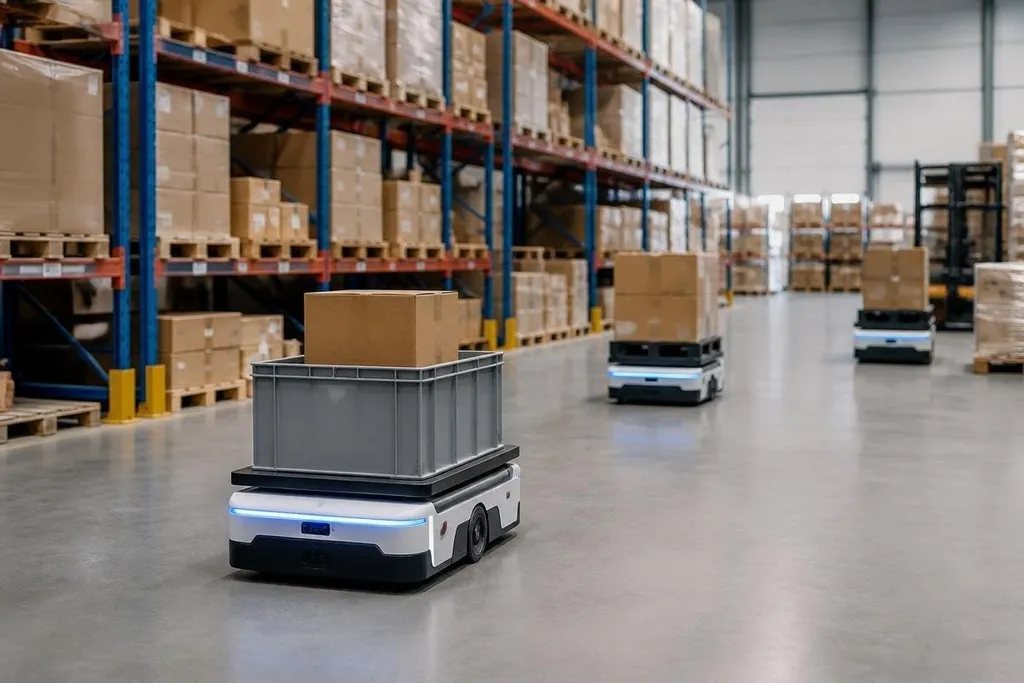
A logistics robot can earn money in more than one way. The robot may move totes, scan shelves, or carry pallets, but the larger business opportunity sits around deployment, software, service, and site changes.
If you sell or buy logistics automation, that wider view matters. A machine that works on the warehouse floor still needs maps, charging, safety checks, repairs, and a way to connect with existing systems.
Quick read
- Robot makers can earn from hardware, software, installation, and service contracts.
- Warehouse operators can sell automation as a service instead of buying a full fleet.
- The open question is repeatable performance across different sites, layouts, and shifts.
Hardware is the first sale
The most direct opportunity is the robot itself. Mobile robots can carry bins between work areas, autonomous forklifts can move pallets, and robotic arms can sort or pick items from fixed stations.
Each job needs a different machine. A tote carrier needs wheels, obstacle sensors, a battery, and a top surface that can hold the load.
A pallet robot needs forks, load detection, braking, and enough clearance for racks and doors. A picking arm needs an end effector, the tool at its wrist, that matches the products it handles.
That creates room for focused suppliers. One company might build the drive system, another the gripper, and another the safety scanner. Buyers can also replace one part without replacing the whole robot, provided the interfaces match.
Hardware sales alone can leave a maker exposed to long gaps between orders. Software and service give the company a way to earn from each deployed system over time.
Software turns machines into a working system
A robot rarely works alone. Fleet software assigns jobs, tracks battery levels, manages traffic, and sends work to the right machine. Warehouse software tells the fleet where a tote or pallet needs to go.
The connection between those systems is a business opportunity of its own. A site may use a warehouse management system for orders and a warehouse control system for equipment. Software that passes tasks between them can remove manual steps and show where work is waiting.
Mapping is another paid service. A mobile robot needs a map of lanes, racks, doors, charging points, and safe zones. When a site changes its layout, someone must update that map and check the new routes.
A changed warehouse layout can leave a robot following old routes until someone updates the map and tests each lane. Reporting at Robot24 can help you compare those site changes with the service work that keeps a logistics fleet running.
Service work starts after installation
Installation creates revenue before a fleet runs its first shift. Technicians need to set up charging points, mark robot areas, connect network equipment, and check emergency stops. The work changes with each building, so it cannot be reduced to shipping a box and plugging it in.
Training creates another opening. Operators need to know how to call a robot, clear a blocked route, use a manual control, and report a fault. Maintenance teams need access to batteries, wheels, sensors, brakes, and cables.
Service contracts can cover spare parts, remote support, inspection visits, and software updates. A buyer may prefer that cost because one failed robot can interrupt a work area even when the rest of the fleet runs well.
New ways to charge for automation
The buyer does not always need to own the machines. A robotics company can charge by month, by operating hour, or by completed task. That lowers the first payment for a warehouse that wants to test one process before buying a fleet.
A system integrator can also combine robots with conveyors, racks, scanners, and control software. The integrator earns from planning and setup while the customer gets one working process instead of several separate products.
I’d start with one repeatable task, such as moving totes between two fixed points, before selling a wider system. That makes the work easier to measure and gives the customer a clear place to check cost, downtime, and safety.
Where the business case can fail
The robot still has limits. A changing floor plan can break routes. Mixed product sizes can defeat a gripper. Batteries need charging, and a blocked aisle can stop work behind the first robot.
A provider also needs to state what happens when the robot fails. Does a person take over? Can another robot accept the task? Is there a manual route for the goods? Those answers affect the cost more than a smooth demonstration does.
The strongest opportunities sit close to these problems because customers pay for working operations, not isolated machines. That includes integration, monitoring, spare parts, site surveys, safety work, and staff training.
A practical buying and selling checklist
Use these points before pricing a logistics robotics project:
- Name the task: define the load, route, handoff, and person who takes over when the robot stops.
- Check the site: measure aisle width, door clearance, floor condition, network coverage, and charging space.
- List the connections: name the warehouse software, scanners, conveyors, lifts, and safety systems involved.
- Price the support: include installation, training, spare parts, mapping changes, inspections, and remote help.
- Set the proof point: agree on the measure that decides the trial, such as completed moves or blocked routes.
That checklist points to the main business lesson. Logistics robots create several paid jobs around each machine, and the companies that handle those jobs may earn revenue long after the first delivery. The next sale will depend on one practical question: can the system keep working when the warehouse changes?